


Do You Need a Lawyer for Probate in NSW?
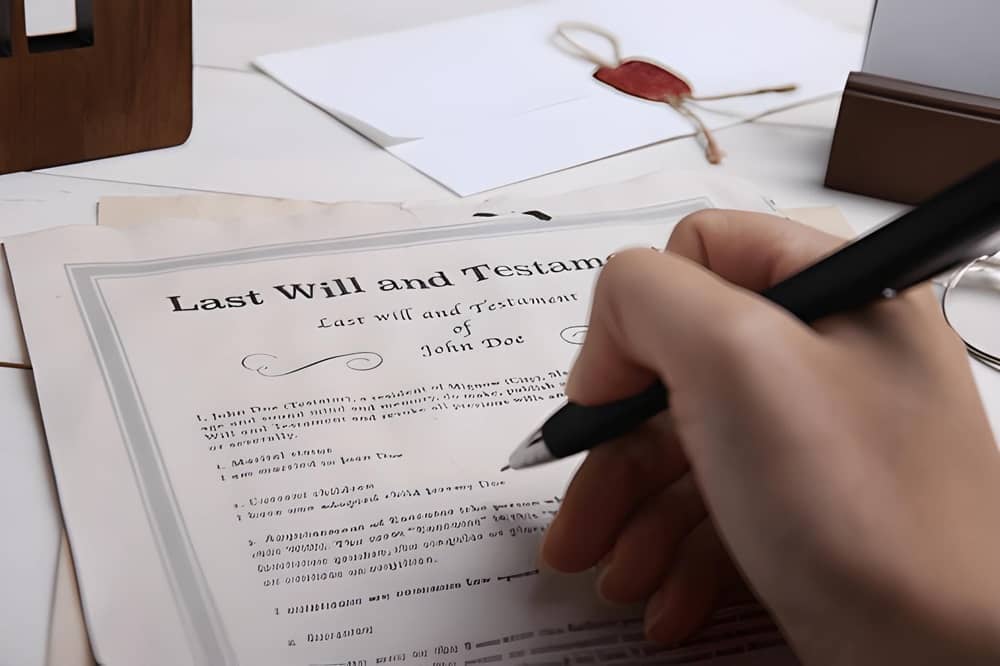
No law requires a lawyer for probate in NSW, and many executors of simple estates apply online themselves. Legal help is worth it when the will is missing, informal, or disputed, or when the estate is complex. Solicitors’ fees for the grant are fixed by regulation and usually paid from the estate.
On this page
- Introduction
- Applying without a lawyer
- How to apply yourself
- When advice is recommended
- What makes it complex
- Straightforward wills
- When to get legal help
- What a probate lawyer does
- Lawyer fees
- Decide with the full picture
Introduction
“Do I need a lawyer for probate in NSW?” is one of the first questions executors ask me, and it deserves a straight answer. The law does not require you to use one. Whether you should depends on the will, the estate, and the people involved.
This guide explains how the do-it-yourself route works, where it tends to go wrong, and what a grant of probate lawyer does that an executor acting alone usually cannot. It also sets out how solicitors’ fees for probate are regulated in NSW, so you can weigh the cost against the risk.
Applying without a lawyer
Yes. There is no legal requirement in NSW to use a lawyer to apply for a grant of probate. Legal Aid NSW, the NSW Government, and the Supreme Court all publish guidance for executors who want to apply themselves. Since 1 August 2023, most uncontested applications are filed online through the NSW Online Registry, which pre-fills the core forms for you.
The Supreme Court also provides help for people filing simple applications. Registry staff can explain procedure, but they cannot give you legal advice about the will, the estate, or your duties as executor. That distinction is important, because the Court expects every application to be complete and accurate regardless of who prepares it.
How to apply yourself
If you decide to apply on your own, the process follows these steps:
- Find the original will and any codicils. The Court keeps the original once it is filed.
- Obtain the death certificate from the NSW Registry of Births, Deaths, and Marriages.
- List and value the estate as at the date of death, including every asset and debt.
- Publish a notice of intended application on the NSW Online Registry. The Court cannot make a grant until 14 days after publication, under Section 42(2)(b) of the Probate and Administration Act 1898.
- Prepare the forms. These are the Summons for Probate (UCPR Form 111), the Grant of Probate (UCPR Form 112), the Inventory of Property (UCPR Form 117), and the Affidavit of Executor (UCPR Form 118).
- Sign the affidavit before a lawyer or Justice of the Peace, and sign the first page of the original will with your witness.
- File the application online, pay the filing fee, and deliver the original will to the Court.
- Answer any requisitions the Registrar raises until the grant is issued.
You should apply within six months of the date of death. After that, you must explain the delay to the Court under Part 78 Rule 16 of the Supreme Court Rules 1970. The Legal Aid NSW step-by-step guide and our own step-by-step guide to applying for probate in NSW cover each stage in more detail.
The Supreme Court’s practice note on generative artificial intelligence (SC GEN 23) prohibits using AI tools to generate the content of an affidavit. If you plan to draft your affidavit with a chatbot, you cannot.
When advice is recommended
Legal advice is recommended whenever an error would cost the estate time or money, or would expose you personally. As executor, you are responsible for collecting the assets, paying the debts, and distributing the estate correctly. If you distribute too early or to the wrong person, you can be held personally liable.
Executors benefit most from advice at three points:
- Before filing, when a short review can prevent requisitions.
- When the Court raises a requisition, you do not understand.
- Before distribution, when the protections for executors under Section 93 of the Succession Act 2006 need to be in place.
Section 93 protects an executor who waits at least six months after the death and publishes a notice of intended distribution with a period of at least 30 days. It also requires that the executor has no notice of a family provision claim when the estate is distributed.
What makes it complex
Some estates look simple until the application reaches a Registrar. These are the issues that most often turn a standard application into a complex one:
- A missing original will. Probate can be granted on a copy, but only with detailed evidence of every search made for the original.
- An informal will. The Court can admit a document that was not properly signed or witnessed under Section 8 of the Succession Act 2006, but it requires evidence.
- A damaged or altered will. Staple marks, tears, and unsigned handwritten changes usually require an affidavit from an attesting witness.
- A marriage or divorce after the will was made. Marriage revokes an earlier will under Section 12 of the Succession Act 2006, and divorce revokes gifts to a former spouse under Section 13.
- An uncooperative co-executor. A notice can be served requiring them to apply or renounce under Part 78 Rule 55 of the Supreme Court Rules 1970. Legal Aid NSW explains the options when an executor is unwilling or unable to act.
- Assets interstate or overseas, which may need a reseal of the grant.
- Business interests, family trusts, or multiple properties, which complicate the inventory and the administration that follows.
Straightforward wills
Not necessarily. If the will is valid, the original is in hand, the executor is willing, and the assets are few and located in NSW, many executors complete the application themselves.
A straightforward will does not always mean a straightforward estate, however. A will that leaves everything to one child can still prompt a family provision claim from another child or a former partner. An eligible person has 12 months from the date of death to make that claim under Section 58(2) of the Succession Act 2006.
If the estate is modest and the family is settled, the do-it-yourself route can work well. If either of those is uncertain, a one-off consultation before you file is inexpensive insurance.
When to get legal help
You should speak to grant of probate solicitors before going further if any of these apply:
- You cannot find the original will, or it has been altered.
- Someone has lodged a caveat against the grant or has told you they will challenge the will.
- A family member has said they will claim a greater share of the estate.
- The deceased married, divorced, or separated after making the will.
- A co-executor will not cooperate or cannot be found.
- The estate includes a business, a trust, or assets outside NSW.
- The Court has raised a requisition you do not know how to answer.
- You do not want to act, or cannot act, as executor.
That last point has its own rules. You can renounce probate before a grant is made using UCPR Form 123. Once a grant is made, you can delegate your duties to the NSW Trustee and Guardian or a trustee company under Section 75A of the Probate and Administration Act 1898. A lawyer can tell you which option suits your situation.
What a probate lawyer does
A grant of probate lawyer takes the legal and procedural work off the executor and manages the risk that comes with it. That work includes:
- Confirming whether probate is needed at all, or whether the assets can be released without a grant.
- Running the searches for the original will that the Court expects to see.
- Publishing the notice of intended application and preparing every form and affidavit.
- Filing the application and lodging the original will.
- Answering requisitions and requesting expedition where the circumstances justify it.
- Handling missing, informal, and damaged wills, renunciations, and reseals.
- Collecting assets, paying debts, and publishing the notice of intended distribution.
- Advising on family provision risk before any beneficiary is paid.
A lawyer can spot a potential claim before it becomes a caveat and knows which evidence a Registrar will ask for before the requisition arrives. If a dispute does arise, we look first at negotiation and mediation. Our contested estates team can act if litigation becomes necessary.
Lawyer fees
In NSW, the professional costs for obtaining a first grant of probate are fixed by law. Section 22 of the Legal Profession Uniform Law Application Regulation 2025 fixes those costs, and the amounts are set out in Schedule 3, Parts 1 and 2, of that Regulation. The scale rises in tiers with the gross value of the estate, and Section 23 of the same Regulation allows GST to be added.
Work outside that scale is charged separately. That includes estate administration after the grant, such as selling property and publishing notices. Those costs must be fair and reasonable under Section 172 of the Legal Profession Uniform Law (NSW). Section 174 of that Law requires your lawyer to disclose the basis of their costs and give you an estimate at the outset.
Legal costs are generally paid from the estate. Section 59(4) of the Trustee Act 1925 allows an executor to be reimbursed from the estate for expenses reasonably incurred in administering it. Court filing fees are separate. They currently range from nil for estates under $100,000 to $7,399 for estates of $5 million or more. Our guide on how much a grant of probate costs in NSW sets out every fee band.
Decide with the full picture
Applying for probate yourself is a legitimate option, and for a simple estate it can save money. The risk lies in what you cannot see from the outside:
- a requisition that stalls the estate for weeks
- a claim that surfaces after you have paid the beneficiaries
- a will that turns out to be invalid
Our free 10-minute case review will tell you whether your estate is one you can handle alone, or one where legal help will save you time, cost, and exposure. If you want us to take it on, see our grant of probate page for the full service, or read how long probate takes in NSW.
Contact us today to schedule a consultation.
Articles
- Can you stop someone from contesting a will
- Can you contest a will after probate has been granted in NSW?
- Can grandchildren contest a will in NSW?
- How Much Does It Cost to Contest a Will in NSW?
- What Are Your Chances of Successfully Contesting a Will?
- How Long Do You Have to Contest a Will in NSW?
- Grounds to Contest a Will in NSW
- Contested Estates & Wills Meaning, Key Terms Explained
- Do You Need a Lawyer for Probate in NSW?
- How Do Beneficiaries Receive Their Money After Probate?
- Understanding the Roles of Grant of Probate vs Executor
- How Much Does Grant of Probate Cost in NSW?
- How Long Does Probate Take in NSW
- Step-by-Step Guide to Applying for Probate in NSW
- Grant of Probate with Will Annexed?
- How Probate Without a Will Works in NSW
- Grant of Probate vs Letters of Administration
- When Is Probate Required in NSW
- Grant of Probate NSW – Complete Guide
- What Happens if We Can’t Agree on Property Settlement? Insights from a Family Lawyer
- Splitting Assets in a De Facto Relationship Breakdown – Why a Family Lawyer Matters
- What Is a Contested Estate and When Can a Will Be Challenged?
- How Do I Keep the Family Home in a Divorce? Advice from a Family Lawyer
- Landlord Demanding Excessive Repairs? How Lease Dispute Lawyers Protect Commercial & Retail Tenants
- Breach of Contract Claims: How Commercial Litigation Lawyers Prove Your Case
- Before You Go to NCAT: How Building Dispute Lawyers Help With Fair Trading First
- Parenting After Separation: How Parenting Lawyers Help Before Going to Court
- How do I formalise my property settlement agreement?
- Understanding the Difference Between License Disqualification and Suspension in NSW License Suspension
- The importance of formalising your family law property settlement agreements
- Family Law Matters Allocated to the Evatt List
- De Facto Relationships In Family Law
- License Suspension in NSW: Your Guide to Understanding and Appealing
- NCAT Disputes
- Litigation And Dispute Resolution
- Environmental And Planning
- Business And Commercial Law
- Building And Construction
- Bankruptcy And Insolvency
Have a problem?
Call 02 9220 1737 or
Fill the form
Fill the form



